
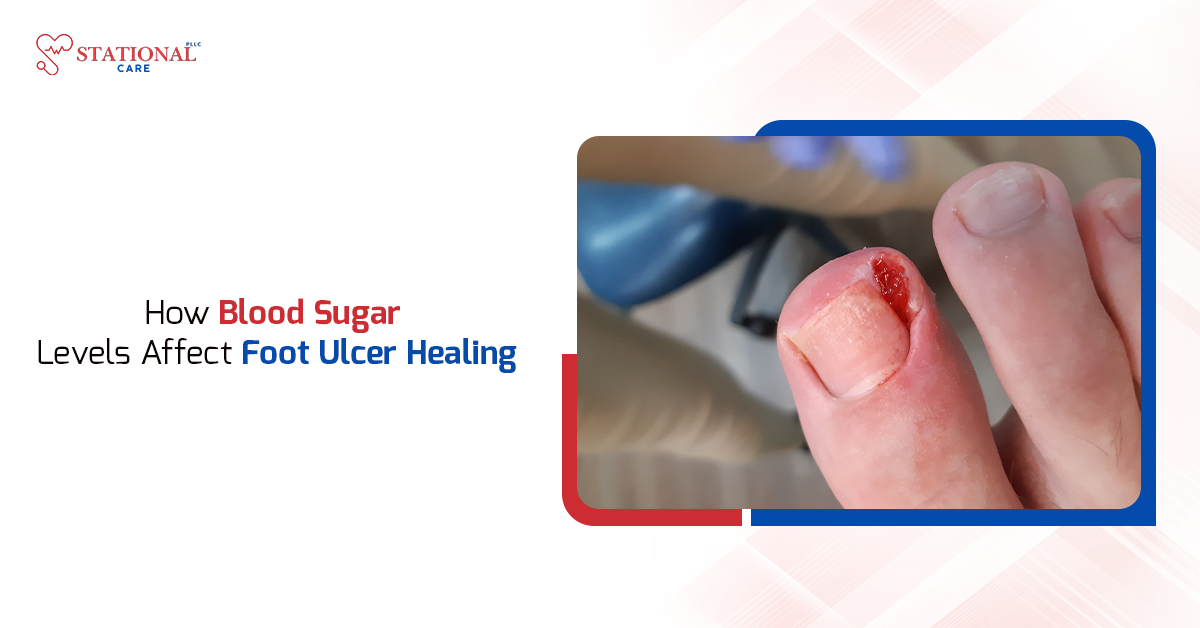
Foot ulcers are usual in diabetes patients, appearing as open sores or foot wounds. These types of ulcers are major problems that may take much time to get better. A high blood sugar level is one of the main reasons for slow healing.
Stational Care offers extensive medical services, including diabetes treatment and wound care for diabetic foot ulcers.
We’ll discuss how blood sugar can affect foot ulcer healing in the feet and what you can do to help them heal sooner and more safely.
Understanding Diabetic Foot Ulcers
Foot ulcers are open sores or wounds that occur primarily on the bottom of the foot. The American Diabetes Association (ADA) states that around 15–25% of people with diabetes will develop a foot ulcer at some point in their lives.
Many of these will need to be admitted to the hospital, a few facing severe conditions demanding the need for surgical amputation.
At Stational Care, we focus on managing diabetes well to lower the risk of foot ulcers and similar problems.
The Role of Blood Sugar in Wound Healing
We can see that blood sugar must be kept within reasonable parameters for normal wound healing. In diabetic patients, prolonged hyperglycemia (high blood sugar) acts unfavorably on all phases of the wound healing process:
- Impaired Immune Response
The presence of high sugar may suppress immunity by lowering the effectiveness of diabetic neutrophils in fighting infections; in doing so, all wound infections are enhanced. Some effects of hyperglycemia on immunity:
- Neutrophils do not function properly
- More bacteria can grow in wounds
- Slower healing from infections
- Poor Circulation
Peripheral artery disease (PAD) is common in people with diabetes. It troubles blood vessels because of soaring sugar levels and reduces blood circulation, especially in the arms and legs.
The consequences of reduced blood flow can be devastating:
- A shortage of oxygen reaching body tissues
- Nutrients are insufficient for a successful recovery.
- Problems with healing and replacement of damaged tissue
Dealing with these concerns helps patients recover well.
- Neuropathy and Pressure Injuries
Diabetic neuropathy is a condition where nerves are damaged due to chronic hyperglycemia. It leads to reduced sensation in the feet. Patients with diabetic neuropathy may not notice the following:
- Cuts
- Pressure sores
- Other injuries
As a result, these injuries can advance and convert into severe ulcers. Neglected sores usually remain unhealed, which can trigger infections and impede restoration.
- Delayed Cell Regeneration
High sugar levels compromise fibroblast functions. Fibroblasts are responsible for the production of collagen and skin regeneration, which results in a compromised tissue repair process with poor formation of scabs and prolonged wound exposure.
Infection Risk: A Dangerous Consequence
Infection is among the biggest problems caused by poor blood sugar control in people with foot ulcers. High glucose levels set up an ideal condition for the growth of bacteria.
The moment an ulcer gets infected, it is a matter of time before it degenerates into cellulitis, abscess, osteomyelitis, or sepsis.
The majority of infected diabetic foot ulcers will require hospitalization and intravenous antibiotics and will sometimes need to be surgically debrided or amputated.
Stages of Wound Healing and How Sugar Affects Them
Healing happens in four stages. High blood sugar affects each stage:
- Clotting (Hemostasis)
This initial phase involves blood clotting to stop bleeding. High blood sugar delays:
- Platelet aggregation
- Activation of clotting factors
This delay leads to prolonged bleeding and inflammation.
- Inflammation
At this stage, the white blood corpuscles migrate to the site to destroy the pathogens. The leukocyte response tends to dampen with raised glucose levels, and the inflammatory markers get prolonged. This prolongation aggravates tissue damage.
- Tissue Growth (Proliferation)
In this phase, the body forms new tissue and grows capillaries. High blood sugar impairs:
- Angiogenesis (formation of new blood vessels)
- Collagen synthesis
This impairment slows tissue granulation.
- Remodeling
In the final phase, the wound matures and strengthens. Chronic high blood sugar interrupts:
This interruption results in fragile skin that is more susceptible to reopening.
Signs Your Foot Ulcer Isn’t Healing
If you have a foot ulcer and notice the following signs, it might mean your blood sugar is slowing the healing:
- The wound is not getting smaller after a few days
- Pus or drainage is coming from the wound
- The area around the ulcer is red or swollen
- You have a fever or chills
- The skin smells bad or looks black
Best Practices for Managing Blood Sugar and Promoting Healing
Maintain Optimal Blood Sugar Control
- Aim for an HbA1c level below 7% (as recommended by the ADA).
- Use continuous glucose monitors (CGMs) for better tracking.
- Follow a diabetes-friendly diet low in simple sugars and refined carbs.
- Adhere to prescribed insulin or oral medications consistently.
Daily Foot Inspections
Check your feet daily for cuts, blisters, redness, swelling, or temperature changes. If you find anything unusual, get help.
Wear Proper Footwear
Wear diabetes-approved shoes with good cushioning and no seams. Never walk barefoot.
Professional Wound Care
- Consult a podiatrist or wound care specialist for advanced ulcer treatment.
- Consider debridement, special dressings, and topical medications.
- Negative Pressure Wound Therapy (NPWT) and hyperbaric oxygen therapy may be recommended for complex ulcers.
Regular Exercise
Exercise improves insulin sensitivity and blood circulation. Try low-impact activities like walking or swimming.
Foot Ulcer Complications from Poor Blood Sugar Control
Ignoring high blood glucose levels can lead to:
- Non-healing ulcers
- Gangrene
- Amputations
- Chronic osteomyelitis
- Long-term disability
- Increased mortality
Preventing Diabetic Foot Ulcers: Proactive Steps
- Annual foot exams with a healthcare provider.
- Podiatry check-ups if any foot abnormalities are detected.
- Routine blood sugar monitoring to avoid unnoticed spikes.
- Education on diabetic foot care and ulcer prevention.
Conclusion
Foot ulcer healing is a multifaceted process deeply influenced by blood sugar levels. Persistent hyperglycemia compromises immune function, impairs circulation, and obstructs every stage of wound healing.
Control blood sugar, have a healthy diet, exercise regularly, and follow a proper foot care guideline to promote healing and prevent further complications.
At Stational Care, our wound care professionals build plans for each patient to help them heal fast and prevent further problems.
We deliver adjustable care solutions, featuring in-office sessions and house visits, plus routine health evaluations and diabetes administration. For more information, contact us.
FAQs
Q: Are foot ulcers able to heal without management of blood sugar levels?
Some minor ulcers might heal without strict sugar control, but if blood sugar control is poor, it will delay the healing process and increase the risks.
Q: When should blood sugar levels be checked if a foot ulcer is present?
Blood sugars should be tested before and after meals. Your healthcare provider will assist you with your decision.